
Mobility Made Simple: 5 Moves Everyone Should Do Daily
Mobility has a reputation problem.
Most people think it requires long routines, special equipment, or an hour of stretching on the floor. Others assume it only matters if you are injured, older, or already in pain. So mobility gets pushed to the bottom of the priority list, right next to sleep and recovery.
That’s a mistake.
Good mobility is not about flexibility for flexibility’s sake. It is about being able to move well, produce force safely, and recover faster so you can train consistently. This idea has been popularized for years in the CrossFit community, especially by coaches like Kelly Starrett, who emphasizes that mobility should be simple, repeatable, and part of everyday life.
You do not need dozens of drills. You need a few high-value movements done consistently.
Here are five mobility moves almost everyone should be doing daily.
1. Couch Stretch
If you sit at a desk, drive for work, or spend time on your phone, your hips are probably stiff. Tight hip flexors limit your ability to squat, lunge, and extend your hips properly during movements like deadlifts, running, and Olympic lifts.
The couch stretch directly targets the hip flexors and quads while reinforcing an upright torso and glute engagement.
How to do it:
- Place one knee on the floor with your foot up against a wall or couch.
- Step the other foot forward into a lunge.
- Squeeze your glute on the back leg and keep your ribs down.
- Stay tall. Do not arch your lower back.
Spend 1 to 2 minutes per side.
Why it matters:
Better hip extension leads to stronger lifts, smoother running mechanics, and less strain on the lower back.
2. Ankle Dorsiflexion Stretch
Limited ankle mobility is one of the most common issues seen in CrossFitters. It affects squatting depth, Olympic lifts, box jumps, and even basic walking mechanics.
If your heels come up when you squat, or your knees cave inward, your ankles are likely part of the problem.
How to do it:
- Place one foot flat on the ground.
- Drive your knee forward over your toes while keeping your heel down.
- You can use a wall, rig post, or band for support.
Spend 1 minute per side, moving slowly in and out of the stretch.
Why it matters:
Better ankle mobility allows you to squat deeper with better posture and absorb force more efficiently.
3. Thoracic Spine Extension on a Foam Roller
Most people spend their day rounded forward. Over time, this limits thoracic spine extension and shoulder overhead position. The result is inefficient pressing, unstable overhead lifts, and increased shoulder strain.
This drill helps restore upper-back movement where it should come from.
How to do it:
- Place a foam roller across your upper back.
- Support your head and neck with your hands.
- Gently extend over the roller, focusing on the upper back rather than the lower back.
- Move the roller slightly and repeat.
Spend 1 to 2 minutes working through tight areas.
Why it matters:
A mobile thoracic spine takes pressure off the shoulders and allows for stronger, safer overhead positions.
4. Banded Shoulder Distraction
Healthy shoulders need space. When the joint gets compressed from training volume, poor posture, or lack of movement, overhead positions suffer.
Banded distractions are a staple in CrossFit gyms for a reason. They are simple, effective, and easy to scale.
How to do it:
- Attach a light resistance band to a rig.
- Place the band around your wrist or upper arm.
- Step back to create tension and let the band gently pull the shoulder.
- Move your arm through comfortable ranges of motion.
Spend 1 minute per side.
Why it matters:
Improved shoulder positioning leads to better presses, snatches, and reduced wear and tear over time.
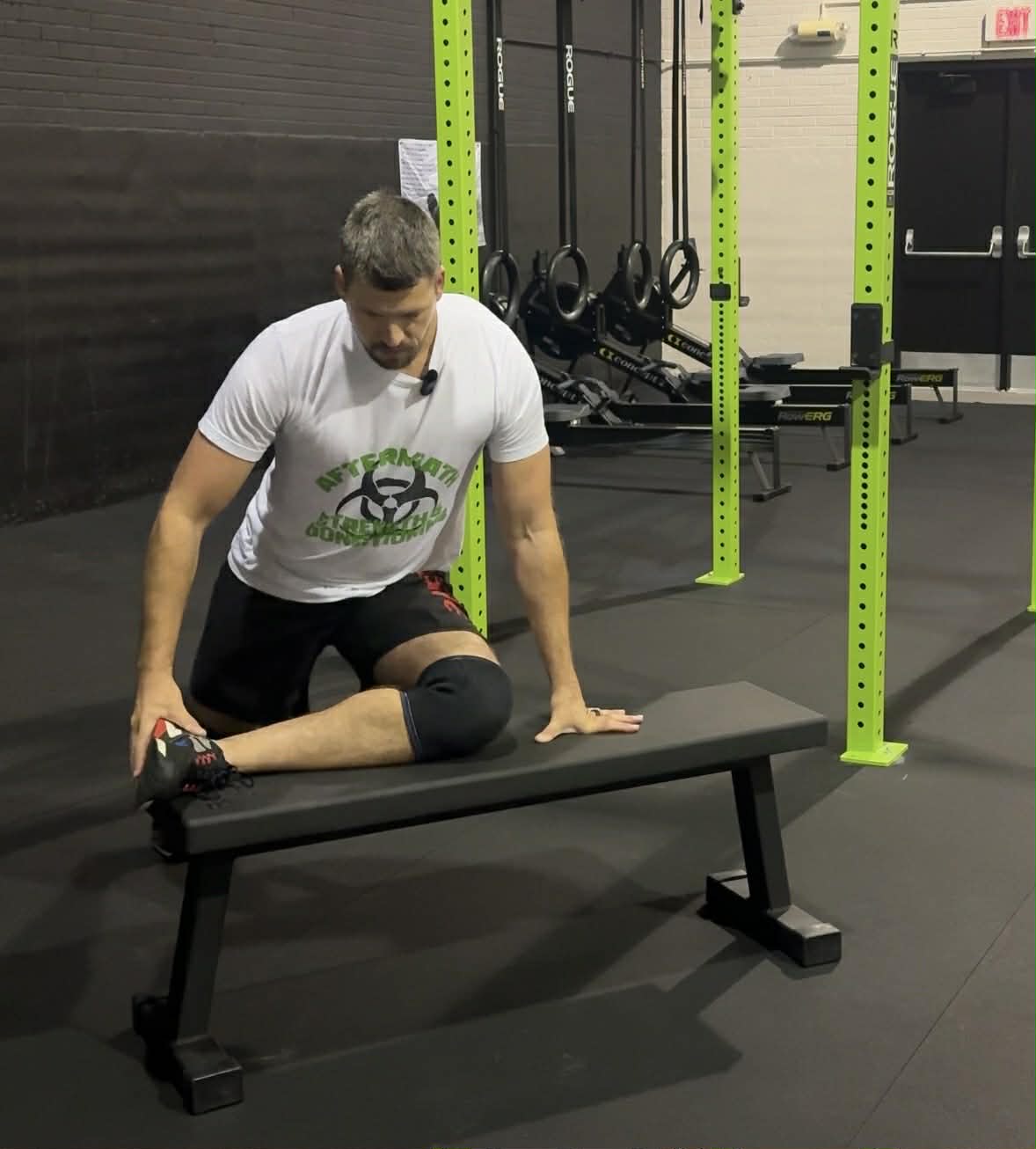
5. 90 90 Hip Rotations
Hip rotation is often overlooked, yet it plays a huge role in squatting, running, and changing direction. Limited internal or external rotation can show up as knee pain, hip discomfort, or inconsistent movement patterns.
The 90 90 position helps restore controlled hip rotation.
How to do it:
- Sit on the floor with both knees bent at 90 degrees.
- One leg is internally rotated, the other externally rotated.
- Keep your chest tall and rotate from side to side under control.
Perform 10 to 15 slow reps.
Why it matters:
Balanced hip rotation improves joint health and movement efficiency, especially as training intensity increases.
How to make mobility a daily habit
Mobility does not work if it only happens once per week.
The key is consistency, not duration.
Here are a few simple ways to make this stick:
- Pick 2 to 3 movements and rotate them daily.
- Use mobility as a warm-up or cool-down, not a separate session.
- Tie it to an existing routine like after training or before bed.
- Keep it short. Ten minutes done daily beats an hour done rarely.
Mobility is maintenance, just like brushing your teeth. You do not wait until there is a problem.
The bottom line
You do not need a complicated mobility routine. You need a few effective movements done consistently.
These five drills cover the hips, ankles, shoulders, and spine, which are the areas most commonly limiting performance and causing discomfort. If you build them into your daily routine, your movement will improve, training will feel better, and injuries become far less likely.
Mobility does not have to be fancy.
It just has to be done.

BOOK YOUR FREE NO SWEAT INTRO TODAY
Take the first step toward a healthier, stronger you—no pressure, no workout required. Just a simple conversation about your goals and how we can help.
Comments are closed